

How to Prepare for a Surf Camp in Costa Rica: The Complete Beginner's Guide

How do I prepare for a surf camp in Costa Rica? Preparing for a surf camp in Costa Rica is less about buying surf gear and more about arriving with the right expectations, essential travel items, and a willingness to learn.
Most beginner-friendly surf camps provide the equipment you need, so your focus should be on packing smart, planning ahead, and getting ready to make the most of every session.
If you're still wondering whether surfing is right for you, our guide, Can Anyone Learn to Surf?, explains why most beginners are capable of learning with the right coaching.
If you're preparing for your first surf camp in Costa Rica, here's what matters most:
Pack light and focus on essentials rather than buying expensive surf gear.
Make sure your passport, travel insurance, and payment methods are ready before you fly.
Bring comfortable clothing, reef-safe sunscreen, and a reusable water bottle.
Arrive with realistic expectations-surf camps are designed to help beginners improve step by step.
Plan to enjoy the full experience, not just the time you spend surfing.
This guide is for first-time and beginner surfers who have already booked (or are about to book) a surf camp in Costa Rica and want to arrive feeling confident, organized, and ready to enjoy the experience. What You'll Learn in This Guide
By the end of this guide, you'll know:
Exactly what to pack (and what to leave at home)
How to prepare physically and mentally before your trip
What to expect on your first day at a surf camp
How to avoid the most common beginner mistakes
Simple ways to get the most out of every surf session
A complete printable checklist before you fly
What Should You Do Right After Booking a Surf Camp?

Booking your surf camp is exciting, but it's also the moment when many beginners start wondering if they're forgetting something important.
The good news is that you don't need to rush out and buy expensive surf gear or spend hours researching every detail.
Most beginner-friendly surf camps provide everything you need to get started.
Instead, focus on a few simple steps that will help you arrive relaxed, organized, and ready to enjoy the experience.
Your First Priorities
Confirm your arrival details with the surf camp.
If your surf camp offers airport transportation, confirm your arrival time and flight number a few days before you travel.
This helps the team plan your pickup and makes your arrival much smoother.
Let the surf camp know about any injuries, medical conditions, or dietary requirements.
Most beginner surf camps already provide surfboards, rash guards, and other essential equipment. Checking what's included before you pack can save luggage space and prevent unnecessary purchases. If this will be your very first surf lesson, you may also enjoy our complete guide to Tamarindo Surf Lessons: The Complete Beginner Guide to Learning Surf in Costa Rica, where we explain exactly what happens during a beginner lesson, from the beach briefing to your first wave.
Save the surf camp's contact details in your phone.
Coach's Tip
One of the easiest ways to start your surf camp stress-free is to ask questions before you arrive.
Surf camps are used to helping first-time surfers, and they'd much rather answer a few questions in advance than have you worry unnecessarily.
Questions to Ask Your Surf Camp Before You Arrive
Before your trip, it's worth sending your surf camp a quick message with any questions you still have. A few minutes of planning can save you a lot of uncertainty once you arrive.
Will all surf equipment be provided?
What time should I arrive on the first day?
Is airport transportation included?
What should I bring to my first lesson?
Are lockers and showers available?
Is there anything I should know about the local weather or tides during my stay?
Taking a few minutes to ask these questions before your trip can help you arrive feeling prepared, relaxed, and ready to focus on what really matters-enjoying your surf camp experience. What Should You Pack for a Surf Camp in Costa Rica?
Packing for your first surf camp can feel overwhelming, especially if you've never traveled for surfing before.
The good news is that you don't need to bring a suitcase full of expensive surf gear.
Most beginner-friendly surf camps provide the essential equipment you'll need, including surfboards and other basic gear.
If you're also planning your overall budget, you might find our guide How Much Does a Surf Vacation in Tamarindo Cost? A Realistic Budget Guide helpful. It breaks down the typical costs of accommodation, surf lessons, transportation, food, and other common travel expenses.
Instead of focusing on what to buy, focus on packing smart so you arrive comfortable, organized, and ready to enjoy every day of your trip.
Surf Equipment: What Do You Actually Need?
One of the biggest misconceptions about joining a surf camp is that you need to own all your own equipment.
In reality, most beginner surf camps provide everything you need to get started.
Here's what is typically provided:
Surfboard
Leash
Rash guard
Surf wax (when needed)
Before buying or bringing your own equipment, check with your surf camp to see what's already included.
It can save you money, luggage space, and unnecessary stress.
Personal Essentials
These are the items you'll probably use every day during your surf camp:
2–3 comfortable swimsuits
Reef-safe sunscreen
Sunglasses
A hat or cap
Reusable water bottle
Flip-flops or sandals
Lightweight clothing
A light rain jacket (especially during the green season)
A small backpack or day bag
The weather in Costa Rica is warm year-round, so comfortable, breathable clothing is usually all you need.
Health & Comfort Items
A few small items can make a surprisingly big difference during your trip:
Personal medications
Toiletries
Insect repellent
Aloe vera or after-sun lotion
Electrolyte tablets or powder (optional)
Lip balm with SPF
Most of these don't take up much space but can make your surf camp much more comfortable.
Electronics
You don't need much, but these items are worth bringing:
Phone charger
Power bank
Waterproof phone pouch (optional)
Camera or GoPro (optional)
Remember that your best memories will probably happen in the water, so don't spend your entire trip looking through a screen.
Coach's Tip
One of the biggest packing mistakes we see is simply bringing too much.
You'll spend most of your time in swimwear, flip-flops, and comfortable clothes.
Pack lighter than you think-you'll appreciate having extra space in your luggage for souvenirs, wet clothes, and everything you collect during your trip.
Now that you know what to bring, let's look at something just as important-what you should leave at home.
Here's a quick packing checklist to help you see what you'll typically need to bring-and what most beginner-friendly surf camps usually provide.
Item | Pack It? | Usually Provided by Beginner Surf Camps? |
Surfboard | ❌ | ✅ |
Leash | ❌ | ✅ |
Rash Guard | ❌ | ✅ |
Surf Wax | ❌ | ✅ |
Swimsuits | ✅ | ❌ |
Reef-Safe Sunscreen | ✅ | ❌ |
Reusable Water Bottle | ✅ | ❌ |
Flip-Flops | ✅ | ❌ |
Lightweight Clothing | ✅ | ❌ |
Personal Medication | ✅ | ❌ |
🎁 Free Printable Surf Camp Preparation Checklist
Planning your trip? To make things even easier, we've created a free printable Surf Camp Preparation Checklist that you can save, print, or use on your phone before you fly.

What Should You Leave at Home?
When you're excited about your first surf camp, it's easy to overpack. Many beginners worry they'll forget something important, so they end up bringing far more than they'll actually use.
The truth is that most surf camps are designed to keep things simple. You'll spend most of your days surfing, relaxing, eating, and exploring, so you don't need a suitcase full of extras.
Here are a few things you can usually leave at home:
Expensive jewelry or valuables
Multiple pairs of shoes
Heavy clothing (unless you're traveling somewhere cooler before or after your surf camp)
Large bottles of shampoo or toiletries (travel-sized products are usually enough)
Bulky beach accessories that are difficult to pack
Expensive surf equipment unless your surf camp specifically recommends bringing your own
Packing lighter makes traveling easier, gives you more room for anything you buy during your trip, and means you'll spend less time organizing your luggage and more time enjoying your surf camp.
Coach's Tip
Many first-time surfers pack for every possible situation. In reality, you'll probably rotate between your swimsuit, a few comfortable outfits, and flip-flops for most of the week.
If you're deciding whether to pack something "just in case," there's a good chance you won't need it.
Now that your suitcase is ready, let's look at what you can do before your trip to arrive feeling confident, healthy, and ready for your first surf session.
How to Prepare Physically and Mentally for Your Surf Camp
You don't need to be super fit or have any surfing experience before joining a beginner surf camp.
In fact, one of the biggest misconceptions is that you need to "get in shape" before you're ready to learn.
Surf camps are designed to help beginners progress step by step, regardless of their starting point.
That said, preparing your body and mindset before your trip can help you feel more confident and enjoy the experience even more.
Physical Preparation
You don't need a complicated training plan.
A little movement in the weeks before your trip can make your first few surf sessions feel much easier.
Simple activities like walking, swimming, cycling, yoga, or light strength training can help improve your endurance, balance, and overall fitness.
If possible, spend a little time stretching your shoulders, hips, and back, as these areas work harder than many beginners expect during their first surf lessons.
The goal isn't to become an athlete-it's simply to arrive feeling comfortable being active for a few hours each day.
Mental Preparation
Learning to surf is exciting, but it can also be challenging at times.
Every beginner falls off the board.
Every beginner misses waves. Every beginner has moments when things don't go exactly as planned.
That's completely normal.
The students who improve the fastest usually aren't the strongest or the most athletic-they're the ones who stay patient, listen to their instructor, and enjoy the learning process.
Want to see what that first breakthrough usually looks like? Read The Moment Everything Changes: When Beginners Start Catching Their Own Waves.
Try to arrive with an open mind and realistic expectations.
Your goal isn't to surf perfectly on day one.
It's to learn something new, build confidence, and have fun in the ocean.
Breathing and Relaxation
Many beginners feel nervous before their first surf lesson, and that's completely normal.
Spending just a few minutes practicing slow, controlled breathing before your trip-or before each surf session-can help you feel calmer, more focused, and more relaxed in the water.
You don't need any special techniques.
Simply slowing your breathing, taking a few deep breaths, and staying present can help reduce nerves and make it easier to enjoy the learning process from your very first wave.
Sleep, Hydration & Recovery
Your body recovers, performs, and learns best when it's well rested.
In the days leading up to your surf camp, try to get enough sleep, drink plenty of water, and eat balanced meals.
During your surf camp, continue staying hydrated, especially in Costa Rica's warm tropical climate.
Small habits like getting enough rest and drinking water between sessions can make a noticeable difference in your energy levels throughout the week.
Coach's Tip
Many beginners worry about whether they're "fit enough" for a surf camp.
In our experience, your attitude matters far more than your fitness level.
Come ready to learn, be patient with yourself, celebrate the small wins, and remember that every confident surfer was once standing exactly where you are today.
Now that you're physically and mentally prepared, let's talk about what actually happens when you arrive for your very first day at a surf camp. What Happens on Your First Day at a Surf Camp?
For many beginners, the first day is the most exciting-and often the most nerve-wracking-part of the entire trip.
If you've never surfed before, it's completely normal to wonder what to expect.
The good news is that beginner-friendly surf camps are designed to ease you into the experience step by step.
Rather than paddling straight into the ocean, your first day is usually focused on building confidence, learning the basics, and helping you feel comfortable in the water.
If you're only planning to book a single surf lesson rather than a full surf camp, you may also enjoy our guide, How to Prepare for Your First Surf Lesson in Tamarindo (Without Feeling Nervous), which focuses specifically on what to expect from your very first lesson.
Getting to Know the Team
Most surf camps begin with a warm welcome and a chance to meet your instructors and the other guests.
You'll usually receive an overview of the schedule, learn how the week is organized, and have time to ask any questions before your first session.
This is also a great opportunity to relax and settle into the experience before thinking about surfing.
Learning the Basics on Land
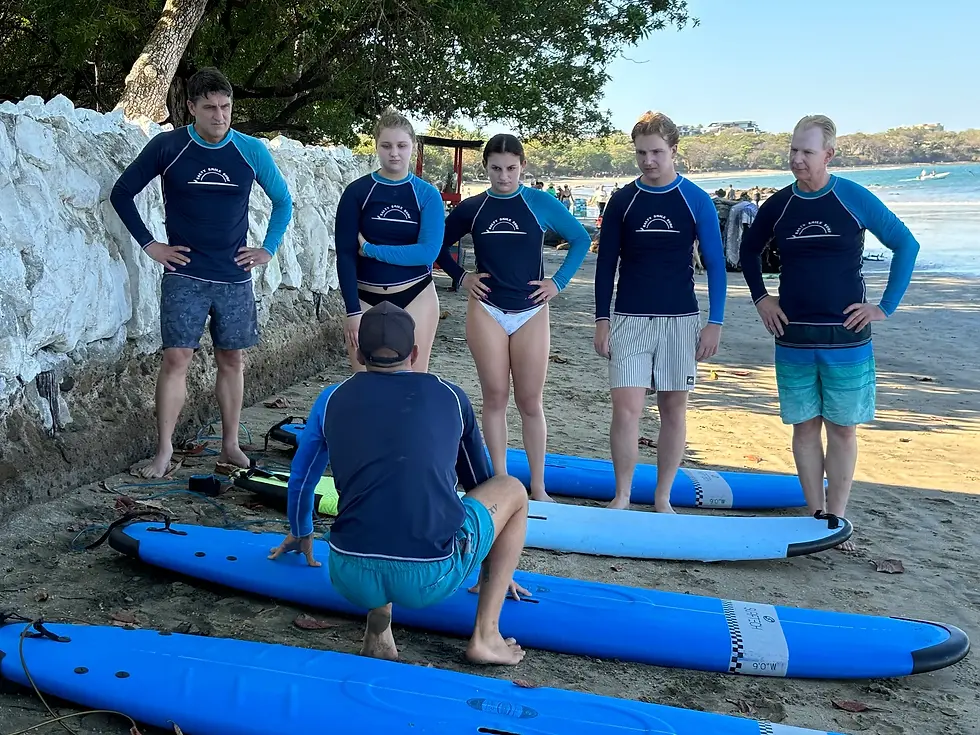
Before entering the water, your instructor will normally explain the fundamentals of surfing.
This often includes:
Ocean safety and awareness
How to carry your surfboard
How to paddle efficiently
The pop-up technique
Basic surf etiquette
Spending time on the beach first helps most beginners feel much more confident once they enter the water.
Your First Session in the Water
When it's time to surf, don't expect to paddle straight into large waves.
Beginner surf camps typically choose smaller, gentler waves where you can safely practice the techniques you've just learned.
Your instructor will guide you through each step, offer feedback, and help you catch your first waves in a safe and supportive environment.
Remember, your first session isn't about surfing perfectly-it's about becoming comfortable in the ocean and building confidence one wave at a time.
Progress Looks Different for Everyone
Some beginners stand up on their very first wave.
Others need a little more time.
Both experiences are completely normal.
Surfing isn't a competition, and everyone learns at their own pace.
The most important thing is to enjoy the process and celebrate every small improvement along the way.
Coach's Tip
Don't judge your entire surf journey by your first session.
Some of the strongest surfers we've taught needed a little extra time at the beginning, while others who stood up quickly still had plenty to learn.
Focus on learning, not comparing yourself to others.
Consistent progress always matters more than a perfect first day.
Want to give yourself an even better start?
Our guide, The 7 Beginner Surf Mistakes That Are Easy to Fix, covers some of the most common mistakes first-time surfers make-and how to avoid them.

Now that you know what to expect on your first day, let's look at how you can make the most of every surf session throughout your camp.
How to Get the Most Out of Your Surf Camp
Joining a surf camp is a fantastic way to accelerate your progress, but simply showing up isn't enough to get the best results.
The beginners who improve the most aren't always the strongest or the most athletic. They're usually the ones who stay engaged, ask questions, and make the most of every opportunity to learn.
Here are some simple ways to get more out of your surf camp experience.
Spend More Time in the Water
The more time you spend in the ocean, the more comfortable you'll become.
If your surf camp offers free time to practice outside your scheduled lessons, take advantage of it whenever it's safe to do so.
Even paddling, sitting on your board, or practicing your balance between lessons helps build confidence and familiarity with the ocean.
Ask Questions
No question is too small.
If you're unsure why something isn't working or want feedback after catching a wave, ask your instructor.
Good surf coaches enjoy helping students understand not only what to do, but why it works.
The more you understand, the faster you'll improve.
Don't Compare Yourself to Other Surfers
Every beginner arrives with a different background.
Some people have experience in skateboarding, snowboarding, swimming, or other board sports.
Others are stepping onto a surfboard for the very first time.
Focus on your own progress instead of comparing yourself to the people around you.
Surfing is a personal journey, and consistent improvement matters far more than keeping up with someone else.
Take Care of Your Body
Surfing is more physically demanding than many beginners expect.
Stay hydrated throughout the day, eat nutritious meals, get enough sleep, and give your body time to recover between sessions.
Looking after yourself outside the water will help you perform better in the water.
Enjoy Everything Beyond Surfing
A surf camp is about much more than learning to ride waves.
Take time to enjoy the local culture, meet new people, watch the sunset, explore the area, and appreciate the experience as a whole.
Some of the best memories from a surf camp happen long after the surf session ends.
Coach's Tip
The students who improve the fastest aren't usually the ones who catch the most waves.
They're the ones who stay curious.
Listen carefully, ask questions, celebrate small improvements, and enjoy the process.
Those habits will help you long after your surf camp is over.

By now, you know how to prepare, what to pack, and what to expect during your surf camp.
Before we finish, let's look at some of the most common mistakes beginners make-and how you can easily avoid them.
Common Beginner Mistakes Before a Surf Camp (and How to Avoid Them)
It's completely normal to feel excited before your first surf camp, but it's also easy to make a few small mistakes that can affect your experience.
The good news is that most of them are easy to avoid with a little preparation.
Here are some of the most common mistakes we see first-time surfers make before arriving at a beginner surf camp.
Expecting to Surf Like the Pros
It's natural to imagine yourself riding long, perfect waves after watching surf videos online.
In reality, surfing takes time to learn, and every beginner starts with the basics.
Set realistic expectations, celebrate small improvements, and remember that confidence grows one wave at a time.
Bringing Too Much Gear
Many beginners assume they need to buy everything before their trip.
In most cases, beginner-friendly surf camps provide the essential equipment you'll need, so packing light is usually the better choice.
Before purchasing expensive gear, check what's already included in your surf camp.
Comparing Yourself to Other Surfers
Everyone learns at a different pace.
Some beginners stand up quickly, while others need a little more practice before everything starts to click.
Comparing yourself to other students only adds unnecessary pressure.
The only progress that matters is your own.

Forgetting That Rest Is Part of Learning
Surfing uses muscles that many people don't use every day.
Trying to push through fatigue without enough sleep, hydration, or recovery can make learning harder.
Taking care of your body is part of becoming a better surfer.
Worrying Too Much Before You Arrive
Many first-time surfers spend weeks wondering whether they'll be fit enough, coordinated enough, or brave enough.
Almost everyone feels that way before their first lesson.
Once you're in the water with an experienced instructor, those worries usually disappear much faster than you expect.
Coach's Tip
After teaching hundreds of beginner surfers, we've learned that confidence doesn't come before your first surf lesson-it grows because of it.
You don't need to arrive as a surfer.
You just need to arrive ready to learn.
You've made it this far, and by now you know how to prepare, what to pack, what to expect, and how to make the most of your surf camp.
Let's finish by answering some of the questions beginners ask us most often before they travel.
Frequently Asked Questions About Preparing for a Surf Camp in Costa Rica
Do I need surfing experience before joining a surf camp?
No. Most beginner-friendly surf camps are designed specifically for first-time surfers and complete beginners.
Your instructors will teach you everything step by step, from ocean safety to standing up on your first wave.
If you're still wondering whether surfing is right for you, you might also enjoy our guide Can Anyone Learn to Surf? (Yes – And Here's What Actually Matters).
Do I need to be in great shape before my trip?
No.
You don't need to be an athlete to enjoy a beginner surf camp.
While light exercise before your trip can help, most surf camps are designed to help you improve at your own pace.
Should I buy my own surfboard before attending a surf camp?
Usually not.
Most beginner surf camps provide surfboards and the essential equipment you'll need during your stay.
Always check what's included before purchasing expensive gear.
What should I wear for my first surf lesson?
A comfortable swimsuit is all you usually need.
Many surf camps also provide a rash guard to help protect your skin from the sun and board friction.
Is Costa Rica a good destination for beginner surfers?
Yes.
Costa Rica is one of the world's most popular destinations for beginner surfers thanks to its warm water, consistent waves, and wide variety of beginner-friendly beaches.
If you're planning to learn in Tamarindo, our guide, Where to Stay in Tamarindo for the Perfect Surf Experience, will help you choose the best area and accommodation for your surf trip.
How many surf lessons should I book?
If you're traveling specifically for a surf camp, most beginners benefit from several consecutive lessons rather than a single lesson.
Surfing is a skill that improves through consistent practice.
Will I stand up on my first day?
Many beginners do, while others need a little more time.
Every surfer progresses differently, and both experiences are completely normal.
What if I'm nervous about surfing?
Almost everyone feels nervous before their first lesson.
Beginner surf camps are designed to create a safe, supportive environment where you can build confidence one step at a time.
Can I join a surf camp if I'm traveling alone?
Absolutely.
Many guests travel solo, and surf camps are a great place to meet people from around the world who share a love of adventure and learning.
What's the biggest mistake beginners make before a surf camp?
Trying to prepare perfectly.
You don't need to know everything before you arrive.
Showing up with realistic expectations, a positive attitude, and a willingness to learn is far more important than having perfect equipment or fitness.
What should I do if I have a medical condition or previous injury?
Let your surf camp know before you arrive.
Your instructors can often adapt the lessons or provide recommendations to help you enjoy the experience safely.
What's the best way to prepare for a surf camp?
Pack light, get plenty of rest before your trip, stay hydrated, keep an open mind, and remember that every experienced surfer started as a beginner.
Conclusion
Preparing for your first surf camp doesn't have to be complicated.
You don't need expensive equipment, perfect fitness, or previous surfing experience.
With a little planning, realistic expectations, and the right mindset, you'll arrive ready to enjoy one of the most rewarding experiences Costa Rica has to offer.
Still planning your budget?
Our guide, How Much Does a Surf Vacation in Tamarindo Cost?, breaks down the typical costs of accommodation, surf lessons, transportation, food, and more-so you can plan your trip with confidence.
Remember that every confident surfer once stood exactly where you are now-excited, curious, and maybe even a little nervous.
Pack smart, trust the process, enjoy every small victory, and most importantly, have fun.
Your first wave is just the beginning.
Ready for Your First Surf Camp in Costa Rica?
If you're looking for a beginner-friendly surf camp in Costa Rica, we'd love to help you take your first steps into the ocean.
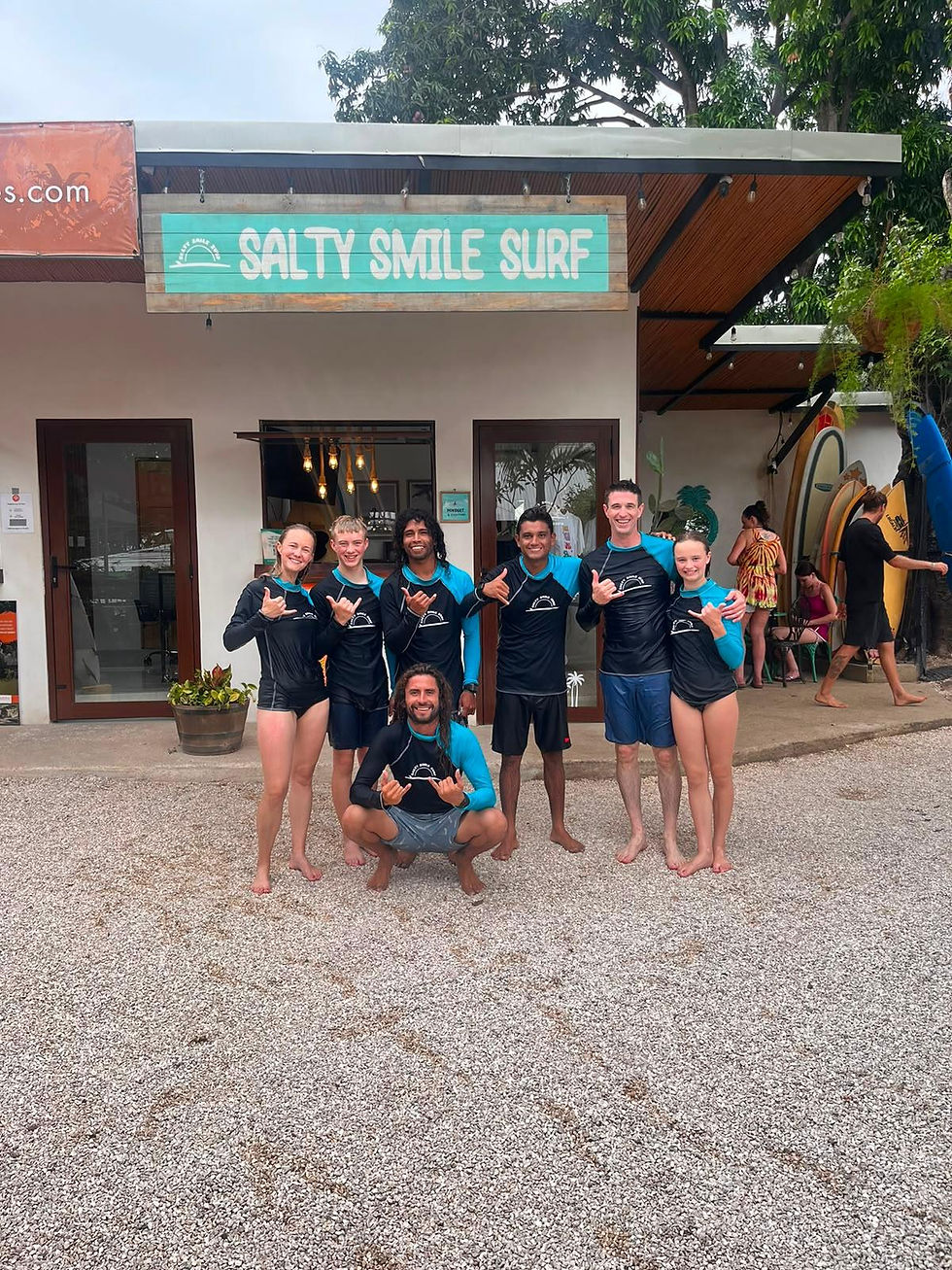
At Salty Smile Surf in Tamarindo, we specialize in private and semi-private surf coaching for beginners, with small instructor-to-student ratios, personalized guidance, and a supportive atmosphere designed to help you build confidence from your very first wave.
Whether you're traveling solo, as a couple, with friends, or as a family, we're here to help you create an unforgettable surf experience.


Comments