

How to Prepare for Your First Surf Lesson in Tamarindo (Without Feeling Nervous)
Everything You Need to Know Before Catching Your First Wave - From a Local Surf Coach Who Teaches Beginners Every Day in
Tamarindo

Imagine this.
Tomorrow morning...
You'll wake up knowing that in just a few hours, you'll be standing on a beach in Tamarindo, getting ready for your very first surf lesson.
Excited?
Probably.
A little nervous?
Almost everyone is.
And honestly...
That's a good thing.
Because after teaching thousands of first-time surfers over the years, I've learned something surprising.
👉 The biggest challenge usually isn't surfing itself.
It's everything people worry about before they even reach the beach.
"What should I wear?"
"Will I embarrass myself?"
"What if everyone else is better than me?"
"Where do I leave my phone?"
"What if I can't even stand up?"
If any of those thoughts sound familiar...
You're exactly where most beginners start.
And by the end of the lesson?
Most people are laughing because they spent days worrying about something they ended up absolutely loving.
So let's walk through your first surf day together.
From leaving your hotel...
To catching your very first wave.
🌊 Today's Goal By the time you finish reading this guide, you'll know exactly what to expect-and you'll arrive at your first surf lesson feeling relaxed, prepared, and excited to get in the water.
Before You Leave Your Hotel
Your surf lesson doesn't start when you step onto the beach.
It starts the moment you leave your hotel.
Take a deep breath.
You don't need to prepare like an athlete.
You don't need expensive equipment.
You don't need to look like a surfer.
You're here to have fun.
Keep it simple.
Bring:
✔ A comfortable swimsuit
✔ A towel
✔ Reef-safe sunscreen
✔ A bottle of water
✔ A change of clothes for after your lesson
That's it.
Seriously.
Don't overpack.
We'll take care of the rest.
👉 Salty Smile Tip
Every student receives a professional UPF rash guard, so there's no need to buy or bring one.
Just arrive ready to enjoy the experience.
What Should You Wear?
The good news?
Surfing in Tamarindo is simple.
The water is warm all year, so you don't need a wetsuit or expensive equipment.
In fact, bringing too much is one of the most common beginner mistakes.
Here's what we recommend:
✔ Wear a comfortable swimsuit
Choose something that stays in place when you move.
You'll spend time paddling, standing up, and falling into the water.
If you're constantly adjusting your swimsuit, it's hard to focus on learning.
✔ Wear a rash guard
A rash guard protects your skin from the sun and from rubbing against the surfboard.
You don't need to buy one before your trip.
We provide professional rash guards for every student at Salty Smile Surf.
✔ Surf barefoot
No water shoes are needed.
The sandy bottom in Tamarindo is soft and comfortable for beginner lessons.
Bare feet also give you much better grip on the surfboard.
✔ Leave the wetsuit at home
Many visitors assume they need one because that's what they see in surfing videos.
Not here.
The Pacific Ocean in Tamarindo stays warm throughout the year, making surfing comfortable in just your swimsuit and rash guard.
Quick Checklist ✅
✔ Comfortable swimsuit
✔ Sunscreen (preferably zinc)
✔ Towel
✔ Water bottle
That's it.
We'll take care of the rest.

Should You Eat Before Surfing?
Yes.
But keep it light.
One of the biggest mistakes beginners make is arriving either on a completely empty stomach or after eating a huge meal.
Neither feels good once you're paddling.
A light meal about 1–2 hours before your lesson is usually the best choice.
Think of foods that give you energy without making you feel heavy.
Good options include:
🥜 Peanut butter toast
🍌 A banana
🥣 Oatmeal
🥛 Yogurt with fruit
🥪 A light sandwich
Most beginner surf lessons involve a surprising amount of paddling, standing up, walking on the beach, and repeating movements.
Having some energy makes the entire experience much more enjoyable.
Don't forget to hydrate.
Costa Rica is hot.
Even morning lessons can feel warm, especially if you're visiting from a colder country.
Drink water before your lesson and bring a reusable water bottle with you.
We'll make sure there's time to take breaks whenever needed.
Avoid this before surfing:
❌ Heavy meals
❌ Too much alcohol the night before
❌ Surfing while dehydrated
The goal isn't to be full.
The goal is to feel comfortable, energized, and ready to enjoy your lesson.
What If I'm Nervous?
Here's something I've learned after teaching thousands of beginner surfers in Tamarindo.
Almost nobody is nervous about surfing.
They're nervous about looking silly.
They worry they'll be the only one who can't stand up.
They worry everyone on the beach will be watching.
They worry they'll hold the group back.
The funny thing?
Almost every beginner is thinking exactly the same thing.
When your lesson begins, those worries disappear surprisingly fast.
Why?
Because you're focused on learning.
You're listening to your instructor.
You're practicing on the sand.
You're laughing when you fall.
And before you know it...
You're having fun instead of worrying.
At Salty Smile, we keep our lessons private or semi-private.
That means you won't find yourself in a crowded group of strangers competing for attention.
Instead, your instructor focuses on you.
Your pace.
Your progress.
Your confidence.
That's one of the biggest reasons beginners tell us they felt comfortable within the first few minutes.
Remember...
Nobody expects you to surf like a professional on your first day.
Your only job is to enjoy the experience and learn something new.
Everything else comes naturally with practice.
🌊 A little secret...
Some of our best surfers today were also the most nervous students when they arrived.
Confidence doesn't come before surfing.
It comes because you started.
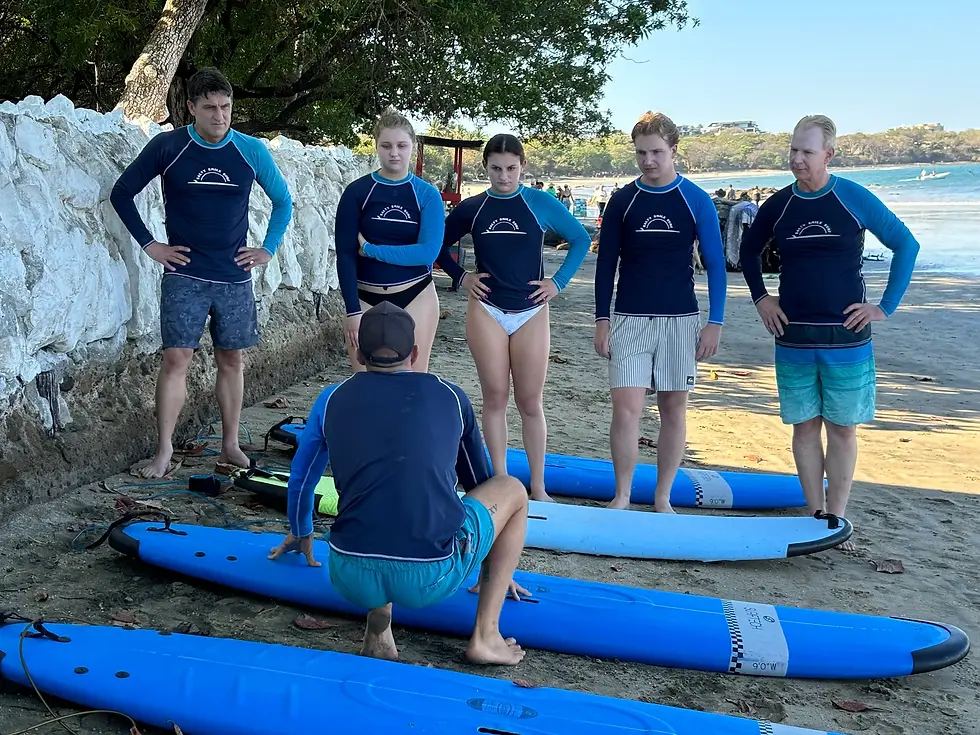
What Actually Happens During Your First Surf Lesson?
Every surf school is a little different.
Here's how a typical beginner lesson works with us at Salty Smile.
1. We get to know you
Before we even touch a surfboard, we spend a few minutes talking.
Have you surfed before?
Do you play sports?
Are you comfortable in the ocean?
Do you have any injuries?
Knowing these things helps us adapt the lesson to you-not the other way around.
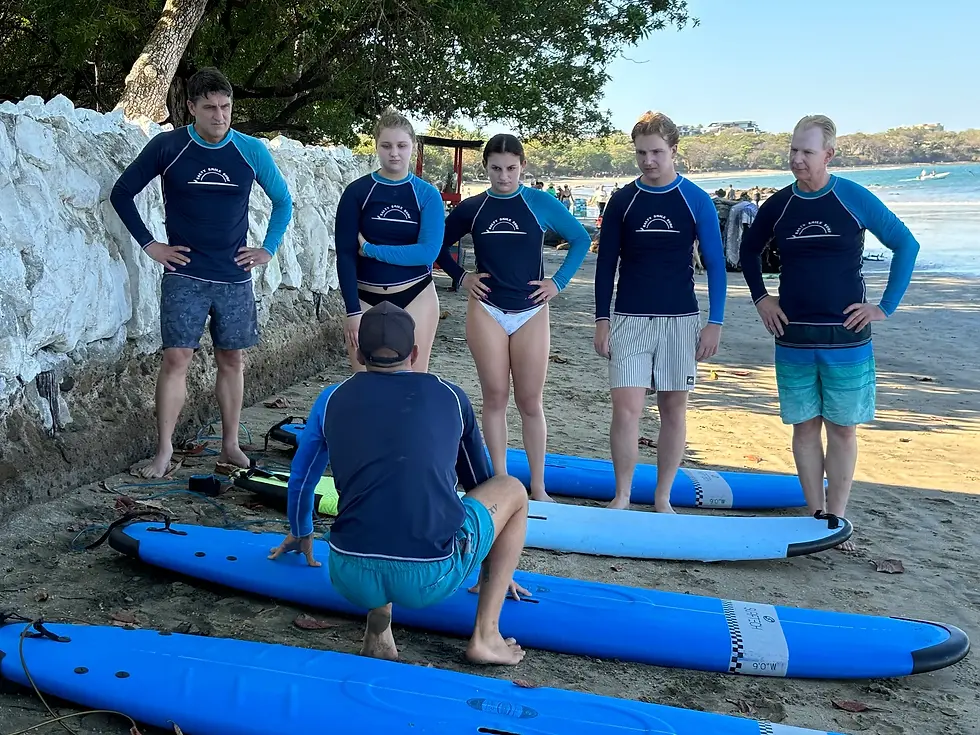
2. Beach instruction
This is where everything starts.
We'll show you:
✔ How to carry the board
✔ How to lie on the board
✔ How to paddle
✔ How to pop up
✔ Where to look
✔ How to fall safely
You'll practice everything on the sand first.
By the time you enter the water, you'll already know what you're trying to do.
3. Into the water
Now comes the fun part.
Your instructor stays with you in the water, helping you choose the right waves and giving you feedback after every attempt.
There's no pressure.
No rush.
Just one wave at a time.
4. Progress happens faster than you think
Most beginners are surprised by how much they improve during a single lesson.
Not because surfing is easy...
But because small corrections make a huge difference.
Sometimes one sentence from your instructor completely changes everything.
The most important goal?
It's not standing up.
It's leaving the beach excited to come back tomorrow.
Because that's when real progress begins.

The Biggest Fear: "What If I'm Terrible?"
Almost every beginner has the exact same thought before their first lesson.
"What if everyone is watching me?"
"What if I can't stand up?"
"What if I'm the worst student of the day?"
The funny part?
Everyone else on the beach is busy thinking the exact same thing about themselves.
Nobody is judging you.
In fact...
Most people are too focused on catching their own waves to notice anyone else.
At Salty Smile, we make this even easier.
We offer private and semi-private lessons, so you're never standing in a big group trying to keep up with strangers.
Your lesson is focused on you.
Your pace.
Your progress.

Some students stand up on their first wave.
Some need a little more time.
Both are completely normal.
Our goal isn't to make you look like a professional.
Our goal is to help you enjoy surfing from the very first session.
What Happens After Your First Lesson?
Most beginners walk back to the beach with one big surprise.
"I actually did it."
Maybe you stood up once.
Maybe five times.
Maybe you caught your very first wave.
Or maybe you simply felt comfortable in the ocean for the first time.
Every one of those is a win.
After the lesson, we usually spend a few minutes talking about what went well and what you'll improve next time.
Sometimes it's simply:
"Look up a little more."
"Move your front foot two inches."
"Start paddling one second earlier."
Small changes.
Big improvements.
That's why so many people are surprised by how much easier their second lesson feels.
The first lesson introduces you to surfing.
The second lesson builds confidence.
The third lesson is often where everything starts to click.
That's why many beginners choose a multi-day package instead of a single lesson.
Instead of starting over every day, they keep building on what they learned the day before.

Quick First Surf Lesson Checklist
Before you head to the beach, make sure you've got these covered:
✅ Wear a comfortable swimsuit.
✅ Bring a towel and a reusable water bottle.
✅ Apply sunscreen before you arrive (zinc is even better).
✅ Eat a light meal 1–2 hours before your lesson—or come on an empty stomach if that's what feels best for you. Avoid heavy meals right before surfing.
✅ Arrive with an open mind and don't worry about standing up immediately.
✅ Listen to your instructor and have fun.
That's it.
You don't need experience.
You don't need to be super fit.
You don't need expensive gear.
We'll take care of the rest. Frequently Asked Questions
Do I need to know how to swim?
You should feel comfortable in the water, but you don't need to be an expert swimmer. We stay in beginner-friendly conditions, use soft-top surfboards for extra flotation, and your instructor is with you throughout the lesson.
---
What if I never stand up?
That's completely normal.
Some people stand up in their first 15 minutes.
Others need a little longer.
Every beginner learns at a different pace, and standing up isn't the only measure of success. Feeling more comfortable in the ocean and learning proper technique are just as important.
---
What should I bring?
Bring a swimsuit, towel, water bottle, and sunscreen.
We'll provide your surfboard, leash, professional rash guard, and secure lockers for your belongings.
---
Is surfing in Tamarindo good for complete beginners?
Absolutely.
Tamarindo is one of Costa Rica's best places to learn thanks to its sandy bottom, forgiving waves, and a wide range of tide conditions that work well for beginners when timed correctly.
---
Should I book one lesson or several?
One lesson is a fantastic introduction.
But if your goal is to feel confident catching waves on your own, most beginners progress much faster with a 3- or 5-lesson package.
Each lesson builds on the previous one, making the learning process smoother, easier, and much more rewarding. Final Thought
Your first surf lesson isn't about becoming a surfer.
It's about discovering something new about yourself.
Maybe you'll stand up on your first wave.
Maybe you won't.
Either way...
You'll leave knowing you did something most people only talk about doing.
And that's a pretty amazing feeling.
Years from now, you probably won't remember how many waves you caught.
You'll remember the excitement.
The laughter.
The ocean.
And the moment you realized...
"I can actually do this."
That's what a first surf lesson is really about. 🌊 Ready to Catch Your First Wave?
Whether you're traveling solo, as a couple, or with your family, we'll make sure your first surf lesson feels fun, safe, and unforgettable.
From the moment you arrive until the moment you catch your first wave, we'll guide you every step of the way.
👉 Send us a WhatsApp message and let's plan your first surf lesson in Tamarindo. 🌊 Continue Your Beginner Surf Journey
Now you know exactly how to prepare for your first surf lesson.
But here's something many beginners don't realize...
Even when you're fully prepared, you might not stand up on your very first wave.
And that's completely normal.
In the next guide, I'll explain why that happens, the three most common reasons beginners struggle, and why it often has nothing to do with talent.
👉 Continue reading:


Comments