

🏄♂️ My Child Is Scared of Waves: How We Turn “No Way” into “One More Wave” in Tamarindo
Updated: Jul 26

Quick Answer
Yes. A child can learn to surf even if they're nervous or afraid of waves. Fear is common during a first surf experience, and the goal shouldn't be to push through it - it's to build enough trust and confidence for the child to want to try.
Most parents don't worry about surfing.
They worry about this:
👉 “What if my child gets scared?”
And the truth is - it happens more often than you might think.
A child can be excited about surfing all morning, smiling on the beach and carrying the board toward the ocean - and then suddenly hesitate when the water reaches their feet.
Even in Tamarindo, with beginner-friendly conditions, the ocean can feel big.
Unfamiliar.
Overwhelming.
And that's okay.
For a nervous child, a successful first surf lesson doesn't have to mean standing up on the board or catching a certain number of waves.
Sometimes success is simply walking into the water.
Sometimes it's lying on the board for the first time.
Sometimes it's catching one small wave with an instructor right beside them.
And sometimes the biggest win of the entire lesson is hearing:
👉 “One more wave.”
That's where confidence begins.
💬 Coach's Insight
“I always tell parents - the goal of the first lesson is not standing up. It's making your child feel safe enough to want to try again.”
After teaching children in Tamarindo over the years, we've learned that confidence rarely appears all at once.
It usually grows through small moments of trust - one step into the water, one comfortable ride, one smile, and then one more wave.

The Moment Every Parent Recognizes
It often starts the same way.
Your child is excited on the beach.
Holding the board.
Smiling.
Ready to try.
Then they step into the water.
A wave approaches, the board starts moving, and suddenly everything feels different.
👉 “No, I don't want to do this.”
They stop.
They step back.
They look at you.
And in that moment, the lesson is no longer really about surfing.
It's about trust.

Why Do Some Kids Suddenly Become Afraid of the Waves?
A child can be completely comfortable on the beach and still become nervous the moment they enter the ocean.
That's because the ocean introduces several unfamiliar sensations at once.
The water is moving around their legs.
The board moves underneath them.
Waves arrive at different speeds.
They may not yet understand what the instructor wants them to do or what will happen next.
For a child, that can quickly create a feeling of losing control.
Common reasons children become nervous include:
✔ Not knowing what to expect
✔ Feeling the board or water move unexpectedly
✔ Being introduced to too much, too quickly
✔ Experiencing conditions that feel too challenging
✔ Feeling pressure to succeed immediately
That's why we don't treat fear as something a child needs to “get over.”
We treat it as information.
It tells us that we may need to slow down, explain something differently, choose an easier wave, or simply give the child another minute before trying again.
How We Help Nervous Kids Build Confidence Step by Step
There isn't one technique that works for every child.
Some children need five minutes.
Others may need most of their first session.
The important thing is to let confidence develop at the child's pace.
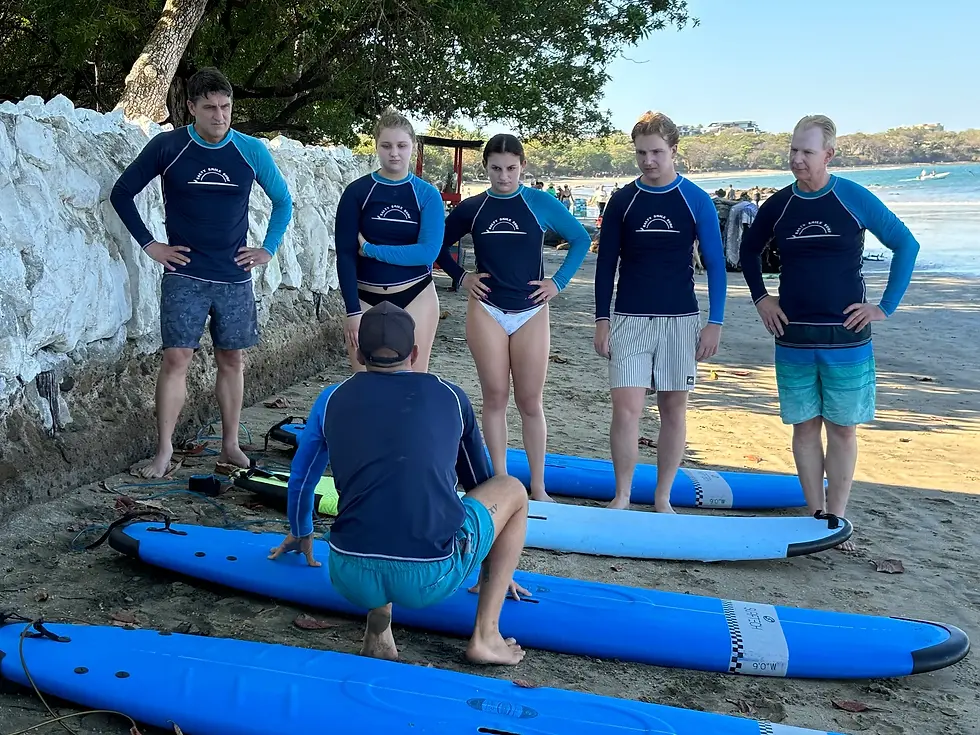
1. We Slow Everything Down
Before worrying about catching waves, we make sure the child understands what's happening.
We talk.
We demonstrate.
We let them become comfortable with the board and the water.
Sometimes that means spending a little longer in very shallow water before progressing.
No rushing. No pressure to perform.
The first objective is simple:
👉 Make the ocean feel more predictable.
When a child understands what's about to happen, the experience often becomes much less intimidating.
2. We Choose the Right Conditions
Not every wave - and not every moment of the day - is equally good for teaching a nervous beginner.
In Tamarindo, surf conditions change throughout the day with the tide, wind, swell, and wave size.
For a child who is already nervous, those differences matter.
🌊 Local Tip
We don't automatically choose morning or afternoon just because one time is more convenient. We look at the conditions that day and choose the lesson time and appropriate area for the student's level whenever possible. For nervous children especially, starting in manageable conditions can make a huge difference in how the ocean feels.
If you'd like to understand why lesson timing matters in Tamarindo, read:
3. We Stay Close
For a nervous child, knowing that the instructor is right beside them can completely change the experience.
We're not standing far away shouting instructions.
We're close enough to guide, reassure, adjust the board, and explain what's happening as the lesson progresses.
As confidence grows, we can gradually give the child more independence.
Support comes first. Independence comes later.
4. We Celebrate Small Wins
Parents naturally want to see their child stand up.
But when we're working with a nervous beginner, we look for smaller victories too.
✔ Walking confidently into the water
✔ Getting comfortable lying on the board
✔ Letting a small wave carry the board
✔ Falling off and being willing to try again
✔ Catching one small wave with a smile
These moments may look small from the beach.
For the child, they can be enormous.
And very often, one small success leads naturally to the words we're waiting to hear:
👉 “Can I try again?”
💬 Coach's Insight
With nervous children, progress isn't always measured by how many waves they catch. Sometimes the most important progress happens before the first wave - when a child stops looking back at the beach and starts looking toward the ocean.

The Micro-Moment That Changes Everything
At some point, something shifts.
Maybe your child catches one small wave and realizes it wasn't as scary as they expected.
Maybe they fall off the board, come back up smiling, and discover that falling is simply part of surfing.
Or maybe they just feel comfortable enough to try again.
The hesitation starts to fade.
They stop looking back toward the beach.
They start looking toward the next wave.
And then you hear:
👉 “One more wave.”
That's the moment we love.
Not because they've suddenly learned how to surf.
But because something more important has changed:
They've started trusting themselves in the ocean.
What Parents Often Feel After the Lesson
For parents, the biggest relief isn't always seeing their child stand up.
Sometimes it's seeing the difference between the child who hesitated at the water's edge and the child walking back up the beach afterward.
They tried.
They smiled.
They discovered that the ocean didn't have to feel quite so intimidating.
And most importantly:
👉 They may want to come back and try again.
For a nervous beginner, that's real progress.
The Real Goal of a First Surf Lesson
It's easy to arrive with one goal:
👉 “I hope my child stands up.”
We understand that.
Catching a first wave is exciting, and of course we want children to experience that moment.
But with a nervous child, we think there's an even more important goal:
👉 “I want my child to leave feeling more comfortable and confident in the ocean than when they arrived.”
Once that foundation is there, learning the actual surfing skills becomes much easier.
Standing up can come next.
Turning can come later.
Independent wave selection can come much later.
Confidence comes first.
Q&A: What Parents Really Want to Know About Nervous Kids and Surfing
Is it normal for kids to be scared of surfing?
Yes. The ocean is a completely new environment for many children, and waves, moving water, and an unfamiliar surfboard can feel overwhelming at first.
Being nervous doesn't mean your child isn't ready to learn.
It may simply mean they need more time, explanation, and support.
Should I push my child to try surfing if they're scared?
No.
Encouragement can help, but pressure usually doesn't.
A good instructor can introduce the experience gradually and adjust the lesson to the child's comfort level.
Sometimes taking one small step voluntarily is more valuable than being pushed into catching a wave before they're ready.
How long does it take for a nervous child to feel comfortable?
There isn't one answer.
Some children relax within a few minutes.
Others may need most of their first session simply to become comfortable with the board, instructor, and moving water.
Every child progresses differently.
What if my child doesn't stand up during the first lesson?
That's completely okay.
Standing up is only one measure of progress.
Learning basic ocean safety, becoming comfortable on the board, understanding how waves work, and wanting to try again are all meaningful achievements during a first lesson.
What happens if my child wants to stop during the lesson?
A nervous child shouldn't feel trapped in the experience.
If they need a break, the lesson can slow down. The instructor can return to shallower water, explain what's happening, or simply give the child time to reset before deciding whether they want to continue.
Should a nervous child take a private surf lesson?
For children who are particularly nervous, individual attention can be very helpful because the instructor can adapt the pace of the lesson entirely around that child's confidence and reactions.
The best format depends on the child's age, experience with the ocean, personality, and who they're surfing with.
Does my child need to be a strong swimmer before taking a surf lesson?
Children should be comfortable enough around water for the activity they're doing, and parents should always tell the surf school honestly about their child's swimming ability and previous ocean experience.
A responsible surf school can then determine whether the conditions, lesson setup, and level of supervision are appropriate for that child.
How close will the instructor stay to my child?
With young or nervous beginners, close supervision is especially important.
During the early stages of the lesson, the instructor should be close enough to guide the board, communicate clearly, and respond as the child becomes familiar with the water.
As confidence and ability improve, independence can be introduced gradually.
Is Tamarindo a good place for a child who's nervous about waves?
Tamarindo can offer beginner-friendly learning conditions, but conditions change with the tide, swell, wind, and location along the beach.
That's why choosing the right conditions for that particular lesson matters more than simply saying Tamarindo is always easy.
If you're deciding whether Tamarindo is the right place for your child, read:
What should I tell the surf school before my child's lesson?
Tell them anything that could help the instructor understand your child better.
For example:
Is this their first time in the ocean?
Are they comfortable swimming?
Have they had a frightening experience with waves before?
Are they excited, nervous, or both?
Do they usually need time before trying something new?
That information can help the instructor approach the first few minutes very differently.
What can I do as a parent if my child becomes scared?
Stay calm and avoid turning the moment into a test they have to pass.
Let the instructor communicate with your child, offer encouragement without pressure, and celebrate the small steps instead of focusing only on whether they stand up.
Sometimes a simple:
“Take your time. You don't have to prove anything.”
is exactly what a nervous child needs to hear.
🏄 Final Thought
Some children run toward the waves.
Others need time before taking that first step into the water.
Both can become confident surfers.
The important question isn't:
“How quickly did my child learn to surf?”
It's:
“How did my child feel while learning?”
Because the first surf lesson isn't only about catching the first wave.
For many children, it's about discovering that something that looked scary from the beach can become something they want to experience again.
And sometimes the best ending to a first surf lesson is just three words:
👉 “One more wave.”

Ready to Help Your Child Take the First Step?
If your child is excited about surfing but nervous about the ocean, you don't need to know in advance exactly how they'll react.
That's part of the experience.
At Salty Smile Surf, we work with each child at their own pace, with patient instruction, close support, and lesson timing based on the conditions in Tamarindo that day.
The goal isn't to pressure your child into catching as many waves as possible.
It's to help them feel safe, supported, and confident enough to want one more.
If you'd like, tell us a little about your child's age, swimming experience, previous experience with the ocean, and anything they're nervous about.
We'll be happy to help you understand what kind of surf lesson would be the best fit for them.
📚 What to Read Next
If you're planning a family surf experience in Tamarindo, these guides can help you with the next questions:


Comments