

Kids Surf Safety: How to Keep Children Safe While Learning to Surf
Updated: Aug 21

Surfing can be one of the most empowering experiences for children. It builds confidence, coordination, respect for nature, and a deep connection to the ocean.But for parents, one question always comes first:
Is surfing safe for kids?
The answer is yes - when it’s done correctly.
Kids surf safety depends on the right environment, professional instruction, proper equipment, and a teaching approach designed specifically for children.
This guide explains everything parents should know about kids surf safety and how to choose safe, high-quality surf lessons for children in Costa Rica and beyond.
Quick Answer: Is Surfing Safe for Kids?
Yes.
Children can learn to surf safely when the lesson is matched to the child's age, confidence, swimming and water comfort, and the ocean conditions that day.
For young beginners, the most important safety factors are appropriate waves, close in-water supervision, beginner-friendly equipment, professional instruction, and an instructor-to-student setup that gives the child enough individual attention.
At Salty Smile Surf in Tamarindo, our instructors are ISA-certified (International Surfing Association), and we typically work with a maximum of two students per instructor.
For younger children, nervous first-time surfers, or children who need additional support, we can assign a dedicated 1:1 instructor.
The youngest children we've taught have been 4 years old, but we don't treat age 4 as an automatic minimum for every child.
Before recommending a lesson, we also consider the child's comfort around waves, ability to communicate with the instructor, confidence in the water, and the conditions that day.
For us, a safe first surf lesson isn't measured only by whether a child stands up.
It starts with whether they feel comfortable enough to trust the instructor, enjoy the ocean, and want to try another wave.
Why Kids Surf Safety Is Different From Adult Surf Safety

Children are not small adults.
They may be smaller and lighter, but the biggest differences aren't only physical.
Children can process waves, instructions, fear, and unfamiliar situations very differently from adults.
A wave that looks small and harmless to an experienced surfer can feel enormous to a child standing in the water for the first time.
That's why a kids surf lesson should be adapted to the individual child - not simply be a shorter version of an adult lesson.
A safe learning setup should consider:
• The child's comfort and confidence in the ocean
• Their age, size, and ability to communicate with the instructor
• Wave size and the conditions that day
• How much individual instructor attention they need
• Equipment appropriate for their size and ability
• A pace that allows them to build confidence without feeling pressured
Some children are excited from the first minute and want to catch wave after wave.
Others need time to stand in the water, understand what's happening, get comfortable with the instructor, or simply watch a few waves before trying.
Both reactions are completely normal.
For us, the goal isn't to push every child through the same lesson plan.
It's to understand the child in front of us and build the session around what helps them feel comfortable, engaged, and ready to learn.
Choosing the Right Beach for Kids Surf Lessons
The right surf area can make a big difference in a child's first experience.
For beginner kids, instructors generally look for conditions that allow them to stay close, communicate easily, and introduce waves gradually.
Depending on the child and the conditions that day, this may include:
• A sandy-bottom area without exposed rocks or reef
• Small, manageable whitewater waves
• An easy entry and exit from the water
• Enough shallow water for the instructor to stay close to the child
• Wave size and power appropriate for the child's confidence and ability
• An area that isn't unnecessarily crowded
But there isn't one beach, tide, or surf spot that is automatically right for every child.
Conditions can change throughout the day, and the same waves that work well for one child may not be appropriate for another.
That's why wave selection is part of the instructor's job.
In Tamarindo, the sandy beach and access to beginner-friendly whitewater can create good learning opportunities for children when conditions are appropriate.
At Salty Smile Surf, we assess the conditions and the individual child before deciding where and how to structure the session.
For young or nervous surfers, we would rather choose smaller, easier waves and build confidence gradually than push a child into conditions they aren't ready for.
The Importance of Certified Surf Instructors for Kids

One of the most important decisions a parent makes is who will be in the water with their child.
Professional certification is an important thing to look for, but when it comes to teaching children, certification alone isn't enough.
A good kids surf instructor also needs to know how to communicate with children, recognize when a child is becoming uncomfortable or overwhelmed, choose appropriate waves, and adjust the lesson instead of forcing every student through the same plan.
At Salty Smile Surf, our instructors are ISA-certified (International Surfing Association) and experienced in teaching beginners, children, and families in Tamarindo.
We typically work with a maximum of two students per instructor, which allows the instructor to stay close, give individual feedback, and respond when a child needs additional support.
For younger children, nervous first-time surfers, or kids who need more individual attention, we can assign a dedicated 1:1 instructor.
Coach's Insight from Bobby
Bobby's approach as our head surf coach is to understand how comfortable a child feels with the instructor and the ocean before focusing on how quickly they stand up.
Building that trust comes before pushing for performance.
Some children are ready to try a wave almost immediately.
Others need more time, more explanation, or simply a few minutes to become comfortable with the instructor and the water.
A good instructor knows when to encourage a child - and when to slow things down.
Equipment Matters: Choosing the Right Surf Gear for Kids
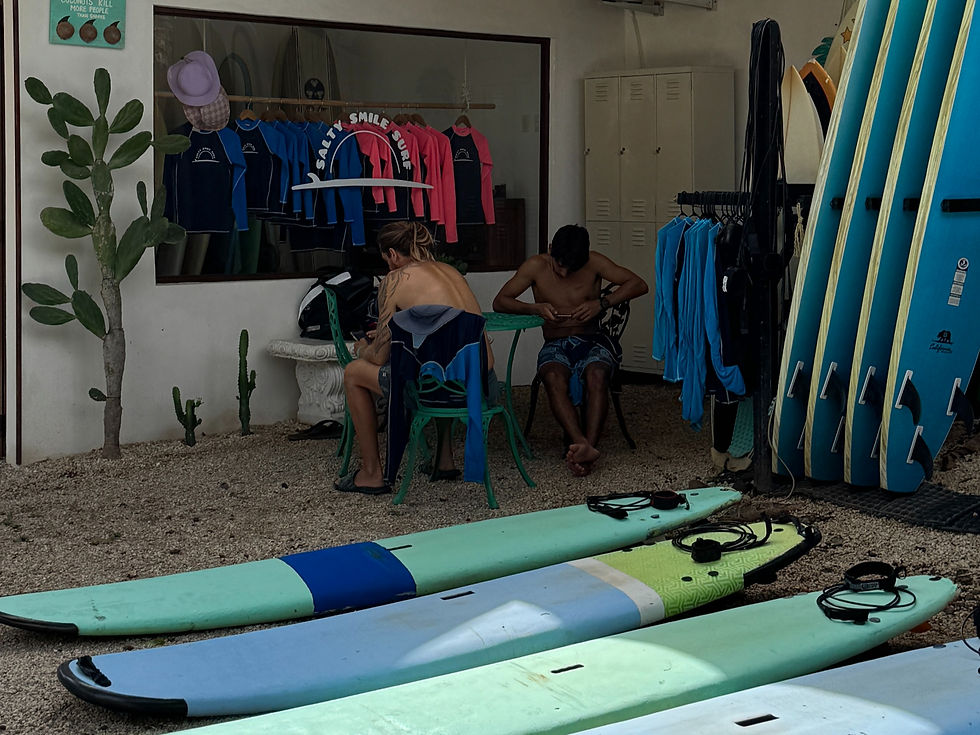
The right equipment is an important part of creating an appropriate learning setup for children.
For beginner kids, the goal is to use equipment that matches their size, ability, and the type of waves they'll be learning in.
At Salty Smile Surf, we use beginner-friendly soft-top surfboards for kids and first-time surfers.
Soft-top boards provide a more forgiving surface than traditional hard surfboards, while the right board size gives the child enough stability to practice, paddle, and catch beginner waves with instructor support.
Equipment should also be checked before every session.
For kids surf lessons, we pay attention to:
• A surfboard appropriate for the child's size and ability
• A properly fitted and well-maintained leash
• A long-sleeve rash guard for sun protection and easy visibility in the water
• Fins and other equipment that are in good condition
But choosing the right equipment isn't only about the gear itself.
Children also need to learn how to use it safely.
Before entering the water, the instructor should explain how to control the board, how to position themselves around it, what to do when a wave approaches, and how to fall away from the board when possible.
The equipment should support the lesson - not make the child work against it.
Ocean Awareness: Teaching Kids to Respect the Ocean
Kids surf safety isn't only about catching small waves or having an instructor nearby.
It's also about helping children understand what is happening around them in the ocean.
Before and during a lesson, kids should gradually learn simple habits such as:
• Watching where waves are coming from
• Understanding where it is appropriate to stand, paddle, and wait
• Listening for the instructor's directions before taking a wave
• Keeping awareness of the surfboard and other people in the water
• Learning how to fall away from the board when possible
• Protecting their head after a fall and when coming back to the surface
• Staying calm after falling and waiting for the instructor when they need help
• Understanding that ocean conditions can change and instructions may change with them
These aren't advanced surfing skills.
They're basic habits that help a child become more aware and comfortable in the ocean.
For young beginners, we introduce this information gradually rather than overwhelming them with too many rules at once.
The instructor can explain one idea on the beach, practice it in shallow water, and reinforce it naturally throughout the lesson.
Over time, the goal is for children to begin understanding not only how to ride a wave, but how to make better decisions around the ocean and their surfboard.
That ocean awareness is an important part of becoming a more independent surfer.
How Safe Kids Surf Lessons Are Structured
A well-structured kids surf lesson should build confidence step by step rather than rushing a child into the waves.
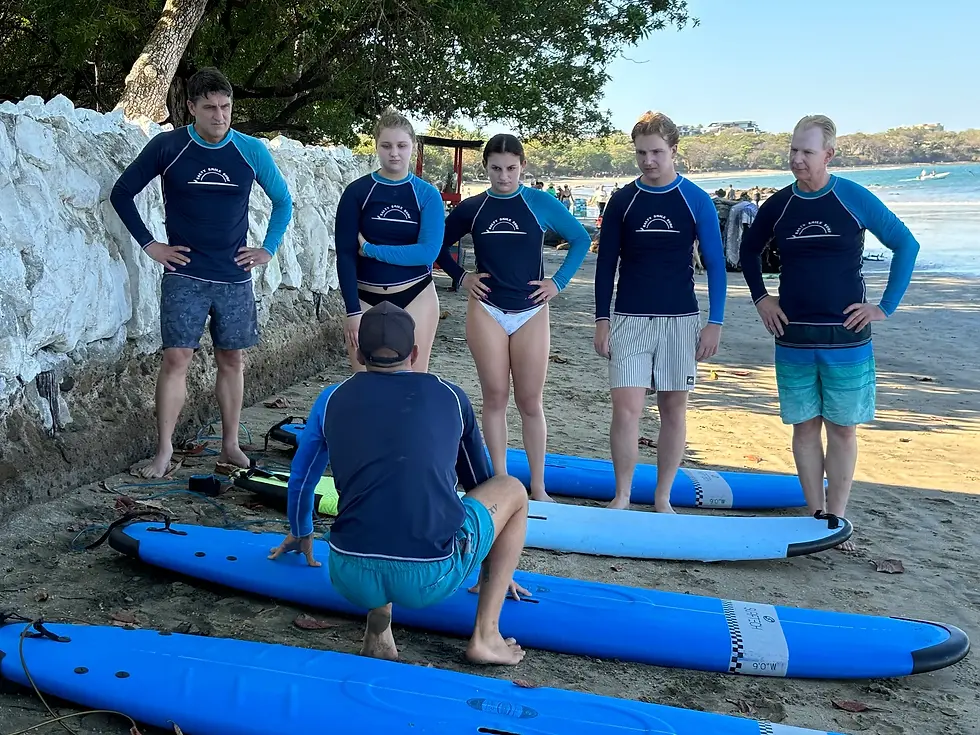
At Salty Smile Surf, the first lesson begins on the beach before the child enters the water.
The instructor introduces the surfboard, explains basic ocean and board safety, practices the pop-up, and makes sure the child understands a few simple instructions they'll use once they're in the ocean.
From there, the lesson moves gradually into the water.
For a beginner child, the instructor stays close and helps with:
• Entering the water and getting comfortable with the board
• Choosing small, manageable waves appropriate for the child
• Positioning the board correctly
• Knowing when a wave is coming and when to get ready
• Giving clear instructions before and during each attempt
• Helping the child recover calmly after a fall
• Adjusting the pace as confidence develops
The lesson doesn't have to follow exactly the same progression for every child.
If a child is excited and comfortable, the instructor can gradually introduce more independence.
If the child becomes nervous, tired, or overwhelmed, the instructor can slow down, return to easier waves, take a break, or spend more time rebuilding confidence before continuing.
For younger children or kids who need closer support, a dedicated 1:1 instructor allows the entire session to move at that child's pace.
The goal of the first lesson isn't to complete a checklist as quickly as possible.
It's to give the child a positive introduction to surfing while beginning to build the skills, awareness, and confidence they'll need for the next wave - and the next lesson.
What If My Child Is Afraid of the Waves?
Fear of waves is completely normal, especially for young children experiencing the ocean in a new way.
The goal shouldn't be to convince a scared child to “just do it.”
Instead, the instructor can slow the experience down and rebuild confidence one small step at a time.
That might mean:
• Spending more time in shallow water before trying a wave
• Letting the child watch the instructor or other surfers first
• Starting with smaller, gentler whitewater
• Practicing with the board without immediately trying to stand up
• Giving the child time to become comfortable with the instructor
• Celebrating small steps instead of focusing only on standing up
For a nervous child, we may also recommend a dedicated 1:1 instructor so there is no pressure to follow the pace of anyone else.
Sometimes the first success isn't standing on a surfboard.
It might be walking a little farther into the water, lying comfortably on the board, catching a wave with the instructor's help, or simply saying, “I want to try one more.”
Those moments matter because confidence built gradually is very different from confidence created through pressure.
If your child is nervous around waves, we've written a complete guide about how we approach fear and help children build confidence at their own pace:
The Parent’s Role During Kids Surf Lessons
Parents can play an important role in helping a child feel comfortable before a surf lesson even begins.
One of the most helpful things you can do is tell the instructor about your child before they enter the water.
Let them know if your child:
• Is nervous around waves or unfamiliar environments
• Has limited swimming or ocean experience
• Has surfed before
• Usually needs time to become comfortable with new people
• Responds better to encouragement, explanation, or a slower pace
• Has had a previous experience in the ocean that made them afraid
That information helps the instructor understand the child before the first wave.
During the lesson, parents are always welcome to watch from the beach, take photos or videos, and stay nearby.
But every child is different.
Some children feel more confident when they can see their parents close by.
Others become more independent once they connect with the instructor and stop looking back to the beach after every wave.
There's no single rule that works for every family.
The important thing is to give the instructor and child space to build trust while still making sure the parent feels comfortable with what is happening.
And parents don't always have to stay on the beach.
Families who want to share the experience can surf during the same private family lesson, with instructors assigned according to the ages, confidence levels, and needs of the surfers.
If a young child needs dedicated attention, we can assign that child a 1:1 instructor while the parents or other family members surf with another instructor.
That way, the family can experience surfing together without asking every family member to learn at exactly the same pace.
Want to understand how a family surf lesson can work when parents want to surf too?
Why Tamarindo Can Work Well for Beginner Kids
Tamarindo has several characteristics that can make it a good place for children to experience surfing for the first time.
The main beach has a sandy bottom, warm water, and access to whitewater waves that can work well for beginner lessons when the conditions are appropriate.
For kids, that can give instructors opportunities to teach close to shore and introduce surfing gradually rather than immediately taking a child into more challenging waves.
But Tamarindo isn't automatically suitable for every child at every hour of every day.
Wave size, tide, wind, crowds, and other ocean conditions change, and children can have very different levels of confidence and water experience.
That's why the question parents should ask isn't simply:
“Is Tamarindo safe for kids to surf?”
A better question is:
“Are the conditions right for my child today, and how will the instructor adapt the lesson to them?”
An experienced local instructor should be able to assess both the ocean and the child before making that decision.
For young beginners, choosing smaller waves, staying close, and changing the plan when conditions or confidence change can be more important than following a fixed lesson time.
How Many Children Should One Surf Instructor Teach?
There isn't one instructor-to-student ratio that is automatically right for every child.
Age, confidence, swimming and ocean experience, surf conditions, and the individual needs of the students all matter.
What parents should ask before booking is how many children will actually be assigned to each instructor - and whether that setup can change if one child needs more support.
At Salty Smile Surf, we typically work with a maximum of two students per instructor.
For example, a family with two confident older children may be comfortable learning with one instructor.
But if one child is very young, nervous around waves, or needs closer support, we can assign that child a dedicated 1:1 instructor instead.
The instructor ratio should support the child - not force the child to fit the ratio.
Frequently Asked Questions About Kids Surf Safety
What age can children start surf lessons?
There isn't one age that automatically determines whether a child is ready to surf.
The youngest children we've taught at Salty Smile Surf have been 4 years old, but we also consider the child's comfort in the water, confidence around waves, ability to communicate with the instructor, and the ocean conditions that day.
For younger children, we may recommend a dedicated 1:1 instructor so the entire lesson can move at their pace.
Does my child need to be a strong swimmer to take a surf lesson?
Swimming ability is important information for the instructor to know before the lesson, but readiness isn't determined by swimming ability alone.
Beginner kids lessons are structured around appropriate conditions and close instructor support, and the instructor should understand the child's swimming ability and water confidence before entering the ocean.
If your child isn't a confident swimmer, tell the surf school before booking so they can determine whether the conditions and lesson setup are appropriate.
What if my child is afraid of waves?
Being nervous around waves doesn't automatically mean a child can't learn to surf.
The instructor can slow the lesson down, begin in shallow water, use smaller waves, spend more time building trust, and allow the child to progress without pressure.
For nervous children, a dedicated 1:1 instructor can also help the session move entirely at the child's pace.
Should children have a private surf instructor?
Not every child necessarily needs a 1:1 instructor.
At Salty Smile Surf, we typically work with a maximum of two students per instructor.
However, for younger children, nervous first-time surfers, or children who need additional support, we can assign a dedicated 1:1 instructor.
The right setup depends on the individual child rather than simply their age.
What equipment should children use when learning to surf?
Beginner-friendly equipment should be appropriate for the child's size, ability, and the conditions.
At Salty Smile Surf, children and first-time surfers learn on soft-top surfboards, with properly fitted leashes and long-sleeve rash guards.
The instructor should also teach the child how to handle the board and what to do around it before entering the water.
How can parents tell if a kids surf lesson is being run responsibly?
Before booking, ask who will teach your child, whether the instructors are professionally certified, how many children are assigned to each instructor, how conditions are selected, what equipment is used, and what happens if your child becomes nervous or uncomfortable.
Parents should receive clear answers before trusting someone to take their child into the ocean.
What Parents Say About Their Kids’ Surf Experience
Parents can ask about certifications, instructor ratios, equipment, and lesson structure before booking.
But it's also useful to look at what other families say after watching their own children learn in the water.
One pattern we value in family feedback is when parents mention patience, individual attention, and instructors adapting the experience to their children - not simply whether they stood up on a surfboard.

Ready to Give Your Child a Safe Start in the Ocean?
Every child arrives at the ocean differently.
Some can't wait to catch their first wave.
Others need time to watch, ask questions, meet their instructor, or simply become comfortable standing in the water.
That's why we don't believe a kids surf lesson should begin with pressure to perform.
At Salty Smile Surf, we match the lesson setup to the child - considering their age, previous experience, water confidence, comfort around waves, and the conditions that day.
If you're planning surf lessons for your child in Tamarindo, tell us a little about them before you book.
Let us know their age, whether they've surfed before, how comfortable they are swimming and being in the ocean, and anything else you think would help us understand them.
Bar, co-owner of Salty Smile Surf, can help you determine which lesson setup makes the most sense for your child and family before you arrive.
The goal isn't simply to get your child standing on a surfboard.
It's to give them a first experience with surfing that makes them excited to come back for another wave.
🌊 Keep your smile salty.


Comments